
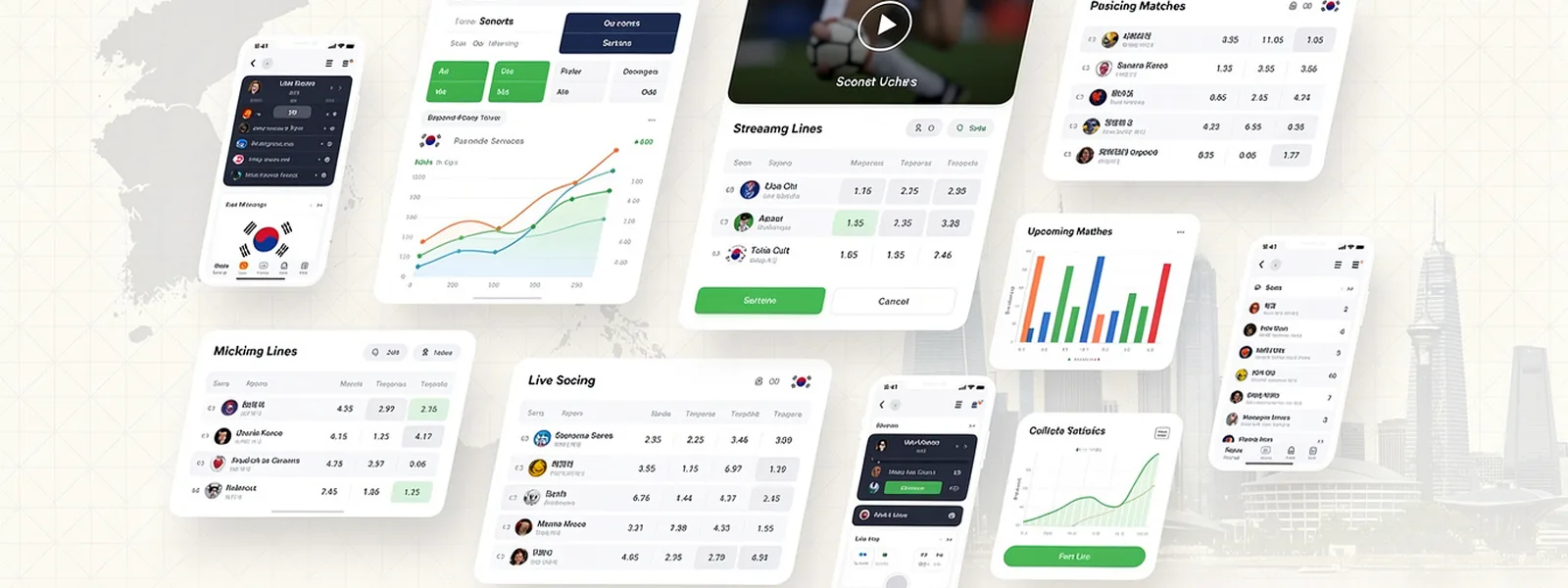
South Korea Betting - Key Facts
- Sports betting in South Korea is classified as "restricted" by the National Gambling Control Commission (NGCC).
- Deposit and withdraw in KRW (₩) using KakaoPay or Naver Pay.
- The legal betting age is strictly 18+. All licensed operators require KYC identity verification.
- Football dominates the betting market.
The South Korea Sports Betting Market
South Korea’s Sports Betting Market: 8 million Bettors and Counting
South Korea represents one of the most distinctive betting markets in its region, shaped by local sports culture and payment innovation. With a large and growing community of active bettors and a significant and growing market, South Korea stands among the most active sports betting populations in its region.
The capital, Seoul, sits at the centre of a betting ecosystem in which roughly 92% of all wagers are now placed via smartphone. Mobile dominance traces directly to the rapid spread of KakaoPay and Naver Pay, which collapsed the time and friction between deciding to bet and actually placing one, and the rise of mobile-first platforms has reshaped player behavior entirely.
What makes South Korea distinctive is the way local sports culture intersects with global betting trends. South Korea is the global capital of esports betting — the LCK (League of Legends Champions Korea) generates the world’s highest esports betting volumes, with Korean bettors driving global esports betting innovation. This single cultural dynamic shapes how operators design their products, which sports they prioritise in their odds compilers, and how they market promotions to South Korea players.
The local football pyramid — anchored by K League 1 — generates the highest single-sport betting volume, but baseball and esports also command serious betting attention. International leagues (English Premier League, La Liga, Serie A, NBA, IPL where applicable) often outdraw the domestic top flight on individual matchdays, especially during European weekend windows.
Population, demographics, and digital reach
With around 52 million residents, South Korea has a demographic profile heavily weighted toward young, mobile-savvy adults — exactly the cohort most active in online betting. Smartphone penetration in urban centres is above 87%, and the rapid expansion of 4G/5G coverage has brought live in-play betting to regions previously dependent on slower networks. This demographic profile aligns closely with the core profile of an emerging-market sports bettor: between 18 and 40, mobile-native, and quick to adopt new payment rails.
Why South Korea matters for international operators
Localisation in South Korea runs deep at the major operators: KakaoPay as a first-class deposit method, KRW-denominated accounts, and customer support teams that understand local sports rivalries and cultural moments. The result is a market where international operators compete directly with domestic incumbents on user experience — a competition that benefits South Korea bettors with better odds, fairer bonuses, and faster payouts.
Is Online Sports Betting Legal in South Korea? The NGCC Position
Formally restricted by National Gambling Control Commission (NGCC) — bettors typically use international sportsbooks via cryptocurrency or international cards. The position is nuanced and worth understanding before placing a single bet.
The role of National Gambling Control Commission
Sports betting oversight in South Korea falls to National Gambling Control Commission (NGCC), the country’s official gaming authority. The regulator is responsible for issuing licenses, monitoring compliance, handling player disputes, and setting standards around responsible gambling. Their official register — published at the NGCC official website — lists every operator currently authorised to offer services to South Korea residents.
What “restricted” means in practice
For South Korea bettors, the practical implications are:
- Age requirement: strictly 18+. Every licensed operator must verify age via government-issued ID before processing deposits.
- KYC verification: mandatory. Expect to upload a national ID and a recent proof of address (utility bill, bank statement) within your first 72 hours.
- Player protections: licensed operators must offer deposit limits, session timers, self-exclusion options, and reality checks. Use these tools — they are specifically designed to keep entertainment from becoming financial harm.
- Tax position: treatment of winnings varies. Most jurisdictions in South Korea’s region either exempt small recreational winnings or apply a flat withholding to large payouts. Consult a local tax advisor for amounts above your annual bracket.
What this means for international operators
International operators with Curaçao eGaming or Malta MGA licenses will accept South Korea players in most cases, even where local licensing remains restricted or in development. We recommend only operators whose licenses we have verified directly against the issuing authority’s public register. Crypto-friendly operators are listed where banking friction may be elevated.
Currency, Money, and Wagering in KRW (₩)
What looks like a minor preference — local currency versus USD — actually shapes long-term profitability. Conversion fees on every deposit and withdrawal compound quickly — over a year of regular play, the difference between a KRW-native account and a USD account can amount to a meaningful percentage of total volume.
KRW accounts: the local advantage
The platforms in our directory all support KRW (₩) end-to-end: deposits accepted in ₩, balances stored in ₩, payouts settled in ₩. There is no FX leakage, and odds displayed match the prices you actually transact at.
The rise of KakaoPay
KakaoPay has transformed deposit speed and convenience for South Korea bettors. A typical KakaoPay deposit clears within seconds — you select the deposit option, confirm the amount on your phone, and the funds appear in your sportsbook account before the next over, half, or quarter starts. This near-instant rail has shifted bettor behaviour towards higher-frequency, lower-stake wagering: more bets per matchday, smaller stake sizes, faster decisions.
Withdrawal realities
If you want to judge an operator quickly, look at withdrawal speed. Reputable NGCC-aligned operators settle KakaoPay withdrawals inside 24 hours; the best return funds within 15–30 minutes. Bank transfers settle in 1–3 working days. Cryptocurrency withdrawals — when offered — typically clear in under an hour after manual approval.
Cryptocurrency as an option
Crypto deposits and withdrawals (BTC, ETH, USDT) are gaining ground among South Korea bettors, particularly those who want to bypass slower banking rails. The .ag-domain operators in our directory (MyBookie, XBet, BUSR, Bet105) are crypto-friendly and accept players from emerging markets. Bet105 is crypto-only. Crypto offers privacy, speed, and freedom from currency-exchange friction — but also brings volatility risk if balances aren’t held in stablecoins like USDT or USDC.
Local Payment Methods in South Korea: KakaoPay, Naver Pay, Toss
The depth of local payment integration is a distinguishing feature of the South Korea market. Below are the methods we expect every reputable operator to support.
KakaoPay
KakaoPay is the dominant payment method in South Korea. Deposits are typically instant, and most operators waive fees on the first KakaoPay transaction. Withdrawals route back to the same KakaoPay account used to deposit, which both speeds up settlement and discourages money laundering.
Naver Pay
Naver Pay is the strongest secondary option. It often serves bettors who prefer card-based payments or whose primary mobile wallet provider isn’t supported by a given operator. Verification with Naver Pay typically follows a 3D Secure (verified-by-Visa) flow that adds a small confirmation step.
Toss and others
Toss is widely supported as a fallback, particularly for higher-value deposits where mobile wallet limits would otherwise apply. Where applicable, operators may also accept Skrill, Neteller, and direct international cards. Cryptocurrency is increasingly common, especially for bettors seeking privacy or faster international payouts.
Picking the right method
| Method | Speed | Fee | Best for |
|---|---|---|---|
| KakaoPay | Instant | Usually free | Daily play, mobile-first bettors |
| Naver Pay | Instant | Usually free | Card-preferred, higher limits |
| Toss | 1–3 days | Free–small | Larger deposits, traditional bettors |
| Crypto | Under 1 hour | Network fee | International, privacy-focused |
Most Popular Sports for South Korea Bettors: Football, Baseball, Esports
Football, Baseball, and Esports dominate the South Korea betting calendar — but the popularity ranking and the way bettors engage with each sport reflects the country’s unique sporting culture.
Football: the flagship
Football is the headline product. K League 1 matches set the weekly cadence, and the highest-volume betting fixtures of the year typically include local derbies, continental club competition matches (such as CAF, AFC, or CONMEBOL tournaments depending on region), and international fixtures featuring the national team.
Expect deep markets on K League 1 matches: 1X2 (match result), Asian handicap, total goals (over/under 2.5 is the most-played line), both teams to score, half-time/full-time, first goal scorer, and a wide range of player props.
Baseball: a serious secondary market
Baseball commands genuine betting attention in South Korea, particularly during international competitions and the regional season’s playoffs. Operators offer comprehensive markets: spread, total points, money line, player props, and quarter-by-quarter propositions on major matchups.
Esports and beyond
Esports rounds out the top three. Beyond these, expect coverage of MMA (UFC dominates), tennis (with ATP/WTA majors as anchor events), and increasingly esports — particularly Counter-Strike, Dota 2, and League of Legends. International leagues (Premier League, NBA, IPL where applicable) usually generate higher individual matchday volume than the local top flight.
How to Choose a Safe Betting Site in South Korea: A 5-Step Framework
Picking the right operator is genuinely consequential. The wrong choice exposes you to slow withdrawals, unfair bonus terms, weak responsible-gambling tooling, and in the worst case, an operator that simply refuses to pay legitimate winnings. Here is the framework we use ourselves.
1. Verify the license
The single most important step. Confirm the operator holds a valid license from NGCC (where formal local licensing exists) or a recognised international authority — Curaçao eGaming or Malta MGA are the most common. The license number must appear on the operator’s footer. Cross-check it against the issuing authority’s public register. If the license number doesn’t appear or doesn’t validate, walk away.
2. Check local payment support
A reputable operator in South Korea should support KakaoPay natively. If the deposit menu lacks KakaoPay, you will spend disproportionate time managing currency conversion and slow rails. KakaoPay support is a baseline requirement, not a bonus feature.
3. Read the welcome bonus T&Cs end-to-end
When evaluating ₩-denominated bonuses available in South Korea, divide the bonus amount by the wagering requirement to estimate daily betting volume needed. If the result exceeds your natural football betting pace, the bonus isn’t worth claiming. Target 30x or lower; treat anything above 40x as a red flag. Also check minimum odds (typically 1.5+), eligible markets (some bonuses exclude certain bet types), and time-to-clear (most expire within 7–30 days).
4. Test the mobile experience
Around 92% of South Korea bettors use mobile. Install the app or load the mobile site, navigate to a live Football match, and time how long it takes to find the market you want and place a sample bet (you can cancel before stake confirmation on most platforms). Speed and clarity are non-negotiable.
5. Evaluate customer support
Test support before depositing significant sums. Send a question via live chat or WhatsApp at off-peak and peak times. Reputable operators in South Korea respond within 5 minutes during peak hours, often in the local language or English. If support is unreachable, that’s the experience you’ll get when something goes wrong with a withdrawal.
Betting Culture and Local Context in South Korea: Slang, Community, and Watch Habits
The South Korea betting community has its own vocabulary, social rituals, and behavioural patterns. Understanding these isn’t decorative — it directly affects how you read promotions, interpret community tips, and judge the credibility of advice circulating in WhatsApp groups, Telegram channels, and X (Twitter) threads.
Local slang every South Korea bettor should know
| Term | Meaning |
|---|---|
| Toto | Sports Toto — the only legal sports betting in Korea (state-run) |
| Beting | Konglish for “betting” |
| Hwago | Odds/price in Korean betting |
| Taegeuk Warriors | South Korea national football team |
| KakaoPay | Dominant fintech app, used as a verb |
| Esports | South Korea is the global esports betting capital — League of Legends Champions Korea (LCK) bets dominate |
These terms appear constantly in betting-shop conversations, mobile app marketing, and online community discussions. Recognising them helps you parse promotional copy and community tips faster.
Social betting and the WhatsApp economy
South Korea bettors are exceptionally social. Booking codes (or their local equivalent) get shared in group chats with hundreds of members. Tipsters — some genuinely informed, many less so — broadcast picks ahead of major matchdays. National team fixtures, derbies, and international tournaments turn family WhatsApp groups into live betting forums.
This community dynamic is a strength of the South Korea market, but it carries risks. Always verify a tipster’s claimed track record before following their picks with real money. The signal-to-noise ratio in informal betting groups is genuinely poor, and even reputable tipsters have losing streaks. Treat every tip as one input among many — never as a guaranteed outcome.
Watch culture: where South Korea bettors actually consume sport
The transition from physical to mobile betting hasn’t eliminated the social side of sports consumption — it has reshaped it. Public viewing venues (sports bars, community centres, local pubs) remain central to matchdays, particularly for K League 1 fixtures and major international events. The dual experience — watching with friends while betting on phones — is a defining feature of South Korea’s betting culture.
Bonuses and Promotions Available in South Korea: ₩ Match Bonuses Explained
Welcome bonuses in South Korea are competitive. Top operators offer 100%–200% deposit-match bonuses with caps ranging from ₩100 on entry-tier platforms to ₩100 on premium operators.
What a fair bonus looks like
A genuinely fair welcome bonus has these characteristics:
- Wagering requirement of 30x or less. Anything higher is heavily skewed toward the operator. The lower this number, the easier it is to convert bonus funds into withdrawable cash.
- Reasonable minimum odds (typically 1.5 or higher). Some operators set this at 1.8 or 2.0, which restricts your selection significantly.
- Reasonable expiry (7–30 days). Anything shorter pressures you into rushed wagering.
- Eligible markets clearly listed. Some bonuses exclude live betting, accumulators, or specific sports. Read this section first.
- Maximum cashout cap visible. A few operators silently cap how much you can withdraw from bonus winnings — that needs to be in plain sight.
Reload and ongoing promotions
Beyond the welcome bonus, expect:
- Reload bonuses on weekly deposits (typically 25%–50% match)
- Free bets triggered by qualifying real-money bets, with 24–72 hour expiry
- ACCA insurance — your stake refunded as a free bet if a single leg of an accumulator loses
- Cashback on net losses over a defined period
- Loyalty programs that exchange wagering volume for bonus credit
Bonus T&C checklist
Before claiming any promotion, confirm: wagering requirement, minimum odds, expiry, eligible markets, maximum cashout, minimum deposit, currency restrictions, and any bet-builder or live betting exclusions. If the operator hides any of these in fine print or external linked documents, treat that as a red flag.
Responsible Gambling in South Korea: NGCC Tools and Local Resources
Treating football betting in South Korea as entertainment (not income) is the framework that separates sustainable players from those who develop problems. Set a ₩ monthly budget, use NGCC-mandated deposit controls, and walk away when the budget is spent. The mathematics of operator margins (the bookmaker’s edge) means that, played as entertainment, the long-term result is a slow loss in exchange for engagement. Played as an income source, the result is a faster loss plus financial harm.
Tools every licensed operator must provide
- Deposit limits (daily, weekly, monthly). Set these the moment you create your account.
- Session time limits. Set a hard stop and stop when it triggers.
- Reality checks. Pop-ups that show you cumulative session time and net position.
- Self-exclusion. From 24 hours to permanent. Use it the moment betting feels compulsive.
- Account history. A full record of every deposit, bet, and withdrawal is your right.
Local resources in South Korea
If gambling is causing personal or financial stress in your life, contact the National Gambling Control Commission for guidance on local support resources and player protection mechanisms. The regulator’s official site at the NGCC official website typically lists national helplines and counselling services.
International support resources include GamCare and Gamblers Anonymous, both of which offer confidential support irrespective of geography.
Warning signs
- Betting more than you planned
- Chasing losses with larger stakes
- Lying about how much you bet or to whom you owe money
- Using funds intended for bills, rent, or essentials
- Feeling anxious or depressed after losing sessions
For South Korea players experiencing two+ warning signs: activate self-exclusion via your account settings (instant, NGCC-mandated) and contact local support services. The earlier the intervention, the simpler the recovery path.
Best Practices for South Korea Bettors: Bankroll, Tracking, and Specialisation
A handful of habits separate disciplined bettors from those who burn out within a season. None are difficult; the challenge is consistency.
Bankroll management
In South Korea, a practical ₩ monthly budget means an amount that, if lost entirely, wouldn’t affect rent, bills, food, or savings. Set this in your operator’s deposit-limit settings (required by NGCC) before placing any bet. Most experienced bettors place stakes between 1% and 2% of bankroll per single bet. Larger stakes should be reserved for high-conviction selections, never for chasing losses.
Track your bets
A South Korea bettor’s most valuable tool is a bet log. Track each wager (football match, market, ₩ stake, decimal odds, outcome) and after 3 months you’ll have honest data on where your edge exists — and where it doesn’t. Without tracking, every bettor remembers their wins and forgets their losses, leading to systematic overconfidence. With tracking, you discover precisely where your edge exists and where it doesn’t.
Specialise
Bettors who profit (or break even on entertainment terms) typically specialise: a single league, a small number of clubs, or one or two market types (Asian handicap on K League 1, total goals on a known league). Generalists who bet on every market across every sport tend to underperform.
Avoid in-play impulse bets
Live betting is the hardest format. Odds move fast, emotions run hot, and operators design live markets to be sticky. If you bet live, set a hard cap on how many in-play bets you place per match, and confirm each one against pre-match analysis rather than gut reaction.
Take breaks
The single most underrated skill in betting is the ability to walk away from a hot streak. Variance creates the illusion of edge; only sustained performance over hundreds of bets demonstrates real edge. Take days off. Take weeks off after losing runs. The market will still be there.
South Korea-Specific Context: AFC Champions League, FIFA World Cup, and continental tournaments
The betting calendar in South Korea revolves around a recognisable rhythm. Continental club tournaments and national team fixtures generate the highest betting volumes. Operator promotions, free-bet offers, and odds-boost specials cluster heavily around these moments — meaning a disciplined bettor who waits for tournament windows often captures the most generous welcome and reload bonuses of the year.
For South Korea bettors specifically, e-wallets — including KakaoPay — have become the default rail, with crypto increasingly common in restricted markets. The dominant payment rail (KakaoPay) processes the overwhelming majority of betting deposits in the country, and operators who fail to integrate KakaoPay natively rarely build sustainable market share. This payment dominance is genuinely structural — it shapes how operators compete for South Korea players, and it explains why some international platforms with weaker local payment integration trail their competitors despite stronger global brand recognition.
How South Korea’s betting community communicates
WhatsApp, Telegram, and increasingly Discord channels host active betting communities where tips and analysis circulate continuously. The dynamic is genuinely valuable: aggregate community knowledge often surfaces specific information about player form, injury news, refereeing patterns, and weather conditions that travels faster than mainstream coverage. The risk is that the same channels also amplify confirmation bias and tipster fraud — the strongest tipsters charge for picks, and the loudest voices are often the least accurate.
A useful rule of thumb: any tipster who claims a strike rate above 75% over more than fifty bets is almost certainly cherry-picking results. Profitable sports bettors typically operate at 53%–58% accuracy on close-to-fair odds, and even the best public tipsters rarely sustain above 60% over extended samples.
Deposit rituals and matchday behaviour
A typical South Korea Football matchday looks like this: bettors top up their KakaoPay accounts in the hour before kick-off, scroll through their preferred operators’ coupon, build an accumulator featuring a couple of “bankers” (high-confidence selections) and one or two longer-odds picks, share the booking code with a WhatsApp group of friends or family, and watch the match while monitoring live in-play markets for late opportunities.
This rhythm — banker accumulator + booking code share + live monitoring — is the dominant betting pattern in South Korea, and operators have built their entire mobile UX around supporting it. Booking code sharing in particular is a feature that international operators specifically localised to compete with domestic incumbents.
Withdrawal Reality Check for South Korea Bettors: KakaoPay Speed Benchmarks
Operator quality reveals itself at the withdrawal stage, not at the deposit stage. Anyone can take your money quickly. The question is whether you can get winnings back, on demand, without artificial friction.
What you should expect from a reputable operator
- KakaoPay withdrawals settled inside 24 hours for verified accounts (most clear within 30 minutes after manual approval).
- First withdrawal documentation request handled in a single round — submit ID and proof of address, get approved, never asked again.
- No “review” delays beyond 48 hours for any standard withdrawal under typical limits.
- Clear withdrawal limits disclosed in the banking page, not hidden in T&Cs.
- A single withdrawal rejection at most, with a clear written reason if approval requires further documentation.
Red flags during withdrawal
- Repeated requests for the same documents you already submitted.
- “Account review” notifications that block withdrawals indefinitely.
- Sudden bonus T&C invocations after a winning streak.
- Customer support that goes unresponsive once a withdrawal is pending.
- Pressure to “play through” balance before withdrawal is permitted.
If two or more of these patterns appear, take screenshots of every conversation, escalate to NGCC (where applicable) or the operator’s licensing authority, and treat the operator’s brand as untrustworthy regardless of its marketing.
Typical withdrawal time benchmarks for South Korea
| Method | Pending | In-transit | Total |
|---|---|---|---|
| KakaoPay | 0–6 hours | Instant | Under 6 hours typical |
| Naver Pay | 0–12 hours | Instant–1 hour | Under 12 hours typical |
| Toss | 6–24 hours | 1–3 days | 1–4 days typical |
| Cryptocurrency | 0–4 hours | 10–60 minutes | Under 5 hours typical |
These benchmarks assume a fully verified account with no outstanding bonus wagering requirements. New accounts typically experience a slower first withdrawal as KYC clears, then settle into the pattern above.
A Brief Note on Operators We Don’t Recommend in South Korea
There are operators that accept South Korea players that we deliberately do not recommend. The reasons fall into a few categories:
Unverifiable licensing. Some operators claim a Curaçao license without a valid number, or list a license number that doesn’t appear on the public register. We verify every license claim directly. If we cannot verify, we don’t recommend.
Predatory bonus structures. Wagering requirements above 40x, minimum odds requirements above 2.0, “phantom” bonuses that appear in the account but cannot be cleared without weeks of dedicated play — all are red flags. The bonus should improve the player’s experience; if it functions to lock funds, the operator is signaling that they expect the player to lose interest before clearing.
Slow or selective withdrawals. Operators who pay losing customers’ winnings quickly but slow-roll high-volume bettors are signaling that they don’t want long-term customers. We don’t recommend platforms with documented patterns of arbitrary withdrawal delays.
Weak responsible-gambling tooling. Operators who hide self-exclusion in account settings, or who continue marketing to self-excluded customers, are not platforms we want South Korea bettors using.
Our sidebar shows the ten partners we have verified. Other operators may be perfectly safe — but the ones in our list are the ones we have personally tested across the dimensions above. When in doubt, default to a verified recommendation.
Local Payments
Popular Sports
NGCC Status
Is Online Betting Legal in South Korea?
National Gambling Control Commission
The NGCC oversees sports betting in South Korea. Minimum age: 18+. KYC verification mandatory.
- RegulatorNGCC
- Statusrestricted
- Min Age18+
- CurrencyKRW (₩)
Regulation Timeline
- Pre-digital
Early Market
Informal betting in South Korea before digital platforms.
- Growth
Online Expansion
International sportsbooks entered South Korea with web and mobile platforms.
- restricted
NGCC Framework
National Gambling Control Commission (NGCC) established formal oversight. Status: restricted.
Betting in KRW - Deposits & Withdrawals
All major operators serving South Korea support KRW (₩) accounts. Deposit, bet, and withdraw in local currency with no conversion fees.
 Bank Transfer
  Cryptocurrency
 Popular Sports for South Korea Bettors
How to Choose a Safe Betting Site in South Korea
- 1
Verify the License
Confirm the operator holds a valid NGCC license or a reputable international license (Curaçao eGaming). Check the license number on the regulator's official website.
- 2
Check Local Payment Support
Ensure the platform supports KakaoPay and Naver Pay. Instant local deposits save time and avoid conversion fees.
- 3
Compare Welcome Bonuses
Read the full T&Cs. Look for wagering requirements under 30x, minimum deposit thresholds, and time limits.
- 4
Test Mobile Experience
Over 80% of bettors in South Korea use mobile. Test the app for speed and live betting responsiveness.
- 5
Evaluate Customer Support
Prioritize platforms with local-language support via WhatsApp, live chat, or phone. Test response times before depositing.
The Betting Landscape in South Korea
Several international sportsbooks operate in South Korea, holding licenses from Curaçao eGaming or comparable jurisdictions. These platforms typically offer KRW accounts, integrate local payment methods like KakaoPay and Naver Pay, and provide coverage of both domestic (football) and international sports markets.
The market includes operators at various tiers - from established brands with decade-long track records to newer entrants competing on mobile UX and bonus generosity. Crypto-friendly operators also serve South Korea bettors who prefer Bitcoin or USDT deposits for speed or privacy reasons.
Regulatory oversight from National Gambling Control Commission (NGCC) shapes which operators can formally serve South Korea residents and what player protections apply. Bettors should verify license validity before depositing at any platform.
Looking for the best betting sites in South Korea?
See our ranked sportsbook guide with verified bonuses, payment methods, and editorial ratings.
Betting Culture in South Korea
Sports betting in South Korea is deeply woven into the social fabric. Mobile apps, WhatsApp groups, and community forums form a vibrant ecosystem where tips, booking codes, and match analysis are shared freely.
The rise of accumulator betting has created a culture of shared excitement - friends pool predictions, share booking codes, and celebrate wins together. Mobile-first betting is the norm, with over 80% of bets placed via smartphone.
Responsible Gambling in South Korea
Sports betting should remain entertainment. Set deposit limits before you start, take regular breaks, and never bet more than you can afford to lose. If gambling causes stress, use self-exclusion tools or contact NGCC for support.
Responsible Gaming Resources →South Korea Betting Questions & Answers
Legal & Regulation
Is online sports betting legal in South Korea?
Heavily restricted. Online sports betting is formally restricted by National Gambling Control Commission (NGCC). Players who use international sportsbooks should understand the legal context before depositing. The minimum age is strictly 18, and identity verification (KYC) is mandatory on every licensed platform.
Who regulates sports betting in South Korea?
National Gambling Control Commission (NGCC) is the supervising authority. They handle licensing, compliance audits, and player disputes. The official portal is https://www.ngcc.go.kr, where you can verify whether a specific operator holds a current license.
What is the legal betting age in South Korea?
18 years. Every licensed sportsbook serving South Korea requires KYC documentation — typically a national ID or passport plus a recent utility bill — before deposits or withdrawals are processed. This protects against underage betting and money laundering.
Can I bet on international sportsbooks from South Korea?
Yes, with conditions. International operators holding Curaçao eGaming or Malta MGA licenses generally accept South Korea players. Always verify the license number on the operator's official register before depositing significant funds.
Can I deposit and bet in KRW?
Yes. All recommended sportsbooks support KRW (₩) accounts, removing currency conversion fees. Some operators also offer USD or crypto accounts as an alternative for bettors concerned about local currency volatility.
Payments & Currency
What payment methods work best in South Korea?
KakaoPay, Naver Pay, and Toss dominate. KakaoPay typically offers the fastest deposit and withdrawal turnaround. International cards (Visa, Mastercard) and cryptocurrency (BTC, USDT) are accepted by most operators as backup options.
How long do withdrawals take in South Korea?
Usually 15 minutes to 24 hours for KakaoPay and other instant rails. Bank transfers may take 1–3 working days. Cryptocurrency withdrawals — when supported — typically settle in under 60 minutes once approved.
Are there minimum deposits for sportsbooks in South Korea?
Yes, but they're low. Most platforms accept deposits from ₩1 equivalent, with ₩5–10 typical for first-time bonus eligibility. Check each operator's banking page for exact thresholds before signing up.
What welcome bonuses are available in South Korea?
Deposit-match bonuses are standard. Top operators offer 100%–200% match on the first deposit, capped between ₩100 and ₩100 depending on the operator. Always read the wagering requirement (target ≤30x).
Are free bets available in South Korea?
Yes — most platforms run weekly free bet promotions. These are typically credited after a qualifying real-money bet settles. Free bets often have minimum odds requirements (e.g., 1.5+) and short expiry windows (24–72 hours).
Sports & Betting
What sports can I bet on in South Korea?
Football, Baseball, and Esports are the most-bet sports. Top operators cover 30–50+ sports including K League 1 (the local top division), international football, basketball, tennis, MMA, esports, and virtual sports.
Is live in-play betting available in South Korea?
Yes, on every recommended operator. Live betting markets update in real time during matches. Some platforms add live streaming for major fixtures, allowing you to watch the action while wagering on next-goal, next-corner, or final score markets.
Can I bet on K League 1 matches?
Yes — K League 1 is fully covered by every major operator serving South Korea, with markets including match result, both teams to score, total goals, Asian handicap, and player-specific propositions. Coverage runs deeper for matchdays involving the top clubs.
Do sportsbooks offer cash-out in South Korea?
Most do. Cash-out lets you settle a bet early — locking in a portion of your winnings before the match ends, or recovering some stake if the bet looks unlikely. It's typically available on single bets and accumulators with two or more remaining selections.
How can I tell if a betting site is safe for South Korea bettors?
Check four signals: (1) a valid license number from NGCC or a top international authority (Curaçao eGaming, Malta MGA), (2) HTTPS/SSL encryption, (3) responsible-gambling tools (deposit limits, self-exclusion), (4) fast and traceable payouts via KakaoPay. Every recommendation in our sidebar passes these checks.
Safety & Getting Started
What responsible gambling tools should I expect?
Deposit limits, session timers, reality checks, and self-exclusion. Licensed operators must offer these by default. Set them up the moment you create an account — before you place a bet — to keep entertainment from becoming financial pressure.
Can I self-exclude from betting in South Korea?
Yes — every licensed operator is required to offer self-exclusion. Durations typically run from 24 hours to permanent. You can usually activate it inside account settings, or by contacting customer support directly. Once active, the operator must block all log-ins and marketing.
Do I need to verify my identity?
Yes — KYC is mandatory. You'll upload a government-issued ID (national ID, passport, or driver's license) plus a proof of address (utility bill or bank statement under 3 months old). Verification protects against fraud and is non-negotiable for licensed operators.
Can I bet on my mobile phone in South Korea?
Mobile is the dominant format — roughly 92% of bets in South Korea come from phones. All recommended operators have responsive mobile sites and dedicated iOS/Android apps. Some apps require manual APK installation outside official stores.
How do I start betting safely from South Korea?
Five steps: (1) pick a licensed operator from our sidebar, (2) register with your real details and email, (3) complete KYC verification, (4) deposit using KakaoPay for instant credit, (5) set deposit and session limits before placing your first bet. Visit /get-started for the full walkthrough.
 Bangladesh
  Cambodia
  India
India  Indonesia